Tuesday, October 2, 2012

Google Chrome - Not Ready for Prime Time

I was getting annoyed at the constant updates to Firefox, so I thought I would give Chrome a try.  I have been using it for a week now.  It has been out for a few years, and finally features plugins, synching (kind of), and such.  Here are the various platforms I tried it on:
  • Windows 7: Lenovo Core i7 8GB / SSD HD
  • Ubuntu Linux 12.04:  HP Pavillion P4 / 1GB / IDE HD
  • Mac OS X 10.7 Lion:  MacBook Pro Core 2 Duo 4GB / SATA HD, iMac Core 2 Duo 3GB / SATA HD
  • iPhone iOS 5, iOS 6:  iPhone 4S

Now, what about Internet Explorer? Lets just say it is a very rare occurrence when I meet a fan of that browser.

So, I have been a long time user of Netscape, and Firefox. I have gotten totally used to features like quick speeds, near 100% compatibility with web sites, and now synching of your browser data across devices. Other than the updates, my one pet peeve with Firefox: no iOS browser.

So when Chrome browser first came out, I was geeked to give it a try.  What I loved most about it, the minimalist interface!  So clean and simple, so iPhone-ish!  Speed, great.  But, biggest problem: compatibility.  Tons of web sites it didn't work on.  And another large problem: it didn't support the Google Toolbar and Google Bookmarks feature.

That was a couple of years ago.  Now, I figured enough time has passed the product should be mature, lots of plug-ins, and compatibility should be fixed.  Right?

Here's what I found:
  • Overall
    • Improvements:
      • Plug-ins, which they didn't have a few years ago.
      • Synch features to synch plug-in apps, bookmarks, cookies, passwords.
    • Disappointments:
      • Still not compatible
      • Can't open tabs from one device on another - a HUGE bonus with Firefox
  • iOS Browser
    • I know from other developers and Apple's history, that the only browser allowed on iOS devices is Safari.  I was happy to see Chrome, but I do know it is a wrapper to Safari.  That's OK, because the wrapper is all the important stuff - synched bookmarks and passwords and cookies and history.  It works well, the user interface is truly great and a vast improvement over Safari.  However, one feature I find I completely can't live without in Safari is the Reader option.  On a web page that is not optimized for mobile, you can tap Reader, and it will render the text with relevant graphics and hyperlinks in large font so it is easy to scroll and read.  Totally Apple-brilliant.
    • BOTTOM LINE: Nice to have synch with my desktops/laptops, but I do have that with the Firefox app - just can't browse in the Firefox app!  Definitely much more useful than Firefox app.
  • Windows
    • Nice and fast, clean, and there is an IETab plugin to open specific web sites in an embedded Internet Explorer in a Chrome tab (just like Firefox).
    • KILLER: Chrome had critical issues with the following web sites:  GMail, Google Voice, Google Calendar.  Notice a common thread here?  The biggest problem I had with Google Chrome was Google's own web sites!  Pop up menus didn't work correctly with mouse clicks, graphic glitches in renderings, and more.  The sites were unusable.
  • Mac
    • Nice and fast, plug-ins worked (except IETab of course), good synching.
    • KILLER: Same as Windows, didn't work on quite a few web sites including my most important Google sites.  My wife loves it, but I found the compatibility issues not worth it on my most important sites.
  • Linux
    • Nice and fast, clean - better launch time than Firefox is definitely noticeable on a slower system.
    • KILLER: Same issues.
Timely, because a colleague Whitson Gordon had a post comparing the browsers.  Chrome is a memory hog, and I found crashes frequently on the Mac and Windows platforms.

So overall, I was not impressed with Chrome.  Disagree?  Give me your feedback.

Friday, September 21, 2012

The iPhone Craze

My wife says to me at lunch yesterday, that there are already people in line at stores waiting to buy the iPhone 5 -- "tomorrow!"  Many people have wondered just what it is that makes people stand in line that much in advance.  I am among those people wondering that.  However, all of my life I have seen this phenomenon.

I first noticed this in 1980.  In 1977, movie making and watching (and the business of films) changed forever with the introduction of what I thought sounded like a dumb film.  Star Wars.  20th Century Fox didn't know what they had, so they signed away the rights to everything except the film.  It ended up being the highest grossing film of all time (in adjusted value), still, but Lucas made much more money on the merchandising.  Then, in 1980, the long-awaited sequel came out.  People camped out in front of the movie theaters to be the first to see it.  How many other films, or film series, have generated lines of people around the globe waiting to get their eyes on it?  How about a day in advance of the showing?


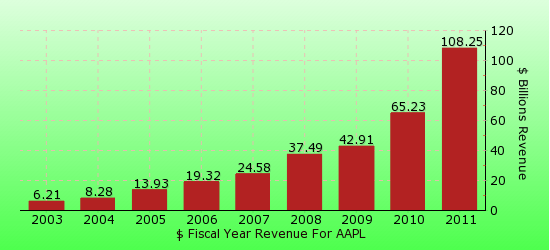
Similarly, in 2007 the iPhone came out.  Think about this.  That's right, 5 years ago, there was no such thing as an iPhone.  5 years ago Apple was called "Apple Computer, Inc." and they made computers, that's it - now look at their revenue, mostly mobile devices.  5 years ago, everyone had a cell phone, the market was pretty saturated, and who were the market leaders?  Nokia, Samsung, Motorola, RIM (Blackberry).  And yet, look at today - who even holds a candle to the iPhone market share of 65%?  RIM is almost out of business, but all others make up 35% combined.  Apple alone, 65%.  And that's growing, still growing, up over 2% from previous quarter.  Let that sink in a moment.

Almost overnight, cell phones were turned upon their proverbial heads, and the industry changed forever.  And, have you ever heard of a cell phone, any cell phone of any type besides iPhone, that people stand in line for days for?  Hours maybe - maybe in some stores for the Galaxy SIII.  But globally, in all stores?  Only the iPhone.  Love it or hate it, you have to admit it is a phenomenon.

I have said before that there really isn't all that much new in the iPhone 5.  And yet, people are standing in line a day before its release - again.  And is it really any wonder?  After playing with a lot of other devices in stores and bought by friends, there is not another device I would use except iOS-based ones (aka Apple).  It's kind of like you get a car with automatic headlights, power windows, power seats, heated and cooled seats, you know, all the amenities.  Then, you get The Thing - the VW Thing from the 70's, butt ugly, and absolutely no amenities on it.  You might have The Thing around for a fun fling, but as your primary means of transportation on a daily, year-round bases?

So is it any wonder, really, that people pay homage to a cultural icon?  That their hearts beat faster and their pupils contract whenever they think about the upcoming release date?  That they open up their wallets with money they don't quite have (oh, I can delay that credit card payment one month just to get this thing)?

Thursday, September 20, 2012

New iPhone iOS Features - First Blush

I have to admit, although I had my hands on iOS 6 Beta for many months, I was totally afraid to upgrade my phone because I rely on it from moment to moment for just about everything in my life!  Pathetic, eh?

So I updated yesterday when 6 came out, and I have to say I am pleasantly surprised.  Just a few new things I noticed:

  1. Panoramic pictures - YEAH!  This is SOO cool, and if you have a fairly steady hand it turns out with almost no distortion.
  2. New Map app - everyone was so up-in-arms about replacing Google Maps, I always said big deal, the Google Map app on iPhone sucked anyway.  Apple's is better, I only will use it occasionally for searching (and not for traffic, directions, etc. - I use MotionX, much better at all of the above!)
  3. Update social networks from Siri - YEAH!  Finally.
  4. In fact, tons of new features on Siri, totally great, I already am about ready to replace my wi...WiFi.  Yeah, that's what I was gonna say.
  5. Do Not Disturb mode in Settings - sends all calls to voice mail, but you can still use your phone.  Great for when you are doing MotionX and trying to navigate, say, the streets of Boston or Pittsburgh!
  6. Privacy (in Settings), allows you to control app access to Twitter, Facebook, and other phone services - FANTASTIC
  7. Snappy!  Yes, iOS 6 has tons of new features, but I think it may even be faster than 5, if that is possible.
  8. THE BIGGIE:  Passbook.  I know people wanted NFC to do wireless payment, but the tech is nowhere near mature and secure enough, so Apple steered clear.  Good move.  Now they offer a common "wallet" where you can store loyalty cards, gift cards, boarding passes, tickets (movie/sport events/concerts/etc.), and more.  App developers need to write their apps to take advantage of Passbook, and store the stuff you get in there, but there are a handful of apps out as of Day 1, and more in process.  This is really great, Droid doesn't have anything to compare.
  9. Support down to 3GS - iOS 6 is retroactively supported down to those old phones, so most current customers can get the cool new features (except Siri of course, and I understand turn-by-turn guidance on the map app, but then again - go ahead and get MotionX).
All in all, I am VERY happy and impressed.  Kudos, Apple (like you need more).  Maybe your stock will break 700...oh, wait.  It did.  Well, maybe it will stay above.

Wednesday, September 12, 2012

iPhone 5 Announcement Reaction

Well, the Apple event just got done, so let's do a round-up of what they announced.

  • iPhone 5 - I'd have to say, for me this was a BIG disappointment.  This is not at all because everything they announced were in line with the rumors we already were aware of.  I find the 5 is a very small improvement over the 4S.
    • They improved size (a bit bigger, slimmer), but not significantly.  I think the screen needed to be much bigger, like the Samsung.
    • LTE, finally, what really took so long?  Should have been out last October.
    • Third mic, small incremental improvement
    • Ear Pods - OK, really so what?  Third party ear buds are always better than the OEM, because otherwise no one would buy them.
    • Lightning connector - this is a big improvement, smaller and reversible, but no mention of whether or not it is faster
    • Systemwide integration with Twitter.  I don't get Twitter.  It really is not very useful to me, I can definitely go the rest of my life without another tweet, and not miss it one bit.  What about other social networking, like you-know-who, or G+, or a myriad of others?
    • Improved battery life, speed, etc.
    • No NFC wireless wallet features - this is a VERY GOOD THING!  Apple holds the line on security, and doesn't deploy a technology until it is well thought out.  Remember Bluetooth?  Just a few years ago, it was so totally insecure, that hackers could break into your phone and steal all your contacts, or render your phone useless because it is constantly prompting you to pair a device.  NFC is definitely not ready for prime-time, and I would not trust my bank account to it.  (I don't have an Enhanced Drivers License as well, thank you very much!)
    • OVERALL: Not really much different, not enough to make me want to jump out and buy one right away.
  • iPod
    • New ones, redo the Nano, OK.
    • BIG HAPPY on the new iPod Touch 5th generation, that is a very good thing, EXCEPT they should have gone all out and put the best camera on it they could.  Then customers would buy it instead of a point-and-shoot camera altogether.
  • iOS 6
    • x00 new features, blah blah blah.  Incremental improvement, nothing earth shattering.

The Bottom Line

Apple is the undisputed leader in the mobile phone, mobile device market.  They have a good thing.  Why rock the boat?  Basically they incorporated some must-haves.  I can understand.  However, I must make an appeal - APPLE, THIS IS YOUR LEAD TO LOSE.  Like Chrysler says, "Lead, Follow, or get out of the way."  Leadership means taking the risks, not on unproven technology, but on innovating new or existing products.  How about these features on the iPhone:
  • Wider screen (in portrait mode...)
  • FM receiver, and Radio app with DAR
  • Social Networking integration, not just Twitter (which I just don't get!)
  • Allowing certain kinds of apps on the Lock Screen (so include in the App Review Process some vetting to ensure valid apps get certified for Lock Screen display, or let the user choose)
  • Password security on each app - users can set up an App Password, then lock chosen apps so they can't be launched without the password.  This further secures certain apps that aren't otherwise secured, from your 3-year-old who picks up your phone, or from a stranger.
  • Electric razor with screen so you can shave while walking
OK, just kidding about the last one.

Friday, September 7, 2012

Apple's New Announcements - and what do they mean to you?

This coming Wednesday, Apple will have new product announcements.  Since Apple is the biggest company in the world (by market cap), and they own both the mobile phone and tablet markets, (oh yeah, and they are making huge inroads to the PC market), there is much speculation.  I have been eagerly reading the blogs (on my iPhone of course), and navigating the rumors.  My big question - what does it all mean to you?  If these rumors are true, what do they really mean?  Here's a roundup of the rumors so far, and my reaction.

iPhone 5

According to many (AllThingsD, MacRumors), these features are likely:
  • Longer screen, but not wider - BOO!  This I have to say is my first disappointment, why didn't they do something like the Galaxy S3 and give us a much bigger screen, not just 16:9?
  • Smaller dock cord - OK
  • Move headphone jack to bottom - OK
  • Faster processor - Sounds great
  • LTE antenna (and 2 antennae, one at top and one at bottom for better reception) - this sounds great, but those of us stuck with AT&T can't take advantage of it.  Our iPhones already say 4G because AT&T's service is non-LTE 4G - much slower than LTE, but not available in a lot of areas.
  • So far, it seems that the 5 is really not very exciting, unless Apple has kept some deep dark secrets.  We shall see.

iPad Mini

  • Smaller than iPad
  • Cheaper than iPad
  • GREAT - should compete with the low-end, probably wipe out all the competition; however, 2 years ago I made a suggestion via their web site: they should come out with an inexpensive full-size iPad shell, that you can plug your phone in, and get the bigger screen.  It could sell for $149 or $199, you get a full size iPad, no additional 3G plan.  Still no word on that.

AppleTV

  • Rumors that since the new 1080p model came out, they won't be announcing another one.  Did you hear, Apple TV sales outpaced XBox? They don't need to.  Roku who?
  • So far, my Apple TV rocks - and it is way beyond my expectations.  Hulu showed up last month, and iTunes Festival last week.  Keep it coming!

Apple TV

  • There were also some rumors floating around that Apple may come out with a new TV set.  What would they call it?  Confusing.  Anyhow, they seem to be debunked - really, what would Apple do above and beyond the others?  Vizio is great.
  • There are also some scuttle about Apple negotiating content and for a streaming service with the cable companies.  Might be interesting.

Wednesday, August 22, 2012

Resale Value of Your Computer

What!?   Did I just title this post "Resale Value" and "Computer" in the same phrase?  That's right.

Just over a year ago, we bought a used Mac from a friend (I find myself an evangelist for Mac platform now).  Before I got so Mac-savvy, I found out it was going up for sale and raised my hand.  When I got it, it hit me what a G5 means (which they told me, but didn't mean anything to me at the time).  Before Macs were built with Intel processors, they used PowerPC chips (a joint venture between Motorola and IBM) - and of course Motorola before that.

So, I had a sinking feeling in the pit of my stomach I overpaid.  I paid $300 for that, keyboard, mouse, speakers, and an Epson printer.  Of course I checked first before I bought and it was a reasonable price.  For a G5 made in 2006.  Bought in 2011.  What!?  If any of you have a Windows machine, you are thinking I was nuts.

However, the G5 was a 64-bit processor, and that Mac works great.  In fact, it is faster than the 2010 HP 64-bit laptop we bought for my wife - by a lot.

Turns out, I paid a fair price.  I have since bought another used Mac off eBay, and have kept an eye on others.  I decided to look at some items over the past 6 months, see what they sell for on eBay.  The state has to be Used and Working.
  • An iMac that retailed for $1,199 back in 2007 sells for about $300 on average (5 years, 25% of its value).
  • A MacBook Pro that retailed for $1,199 in 2009 sells for about $700-$800 on average (a whopping 67% of its value after 3 years)
  • The Mac Mini desktop, that retailed for $599 in 2007, sells for $200-$300 on average (about 42% of its value)
That kind of depreciation is unheard of in the electronics, and certainly computer, industry.  A computer as an investment? Get real!

Let's compare that to some others:
  • Lenovo Thinkpad W510 Core i7, 8GB RAM - that was about $2,500 retail in 2009, and now sells for - wait for it - about $350.  14%.
  • Many desktops I know went for about $600-$700 new, now sell for about $60-$80.  10%-15% of their value.
I find this shocking.  Truly shocking.  In fact, some Macs that are a year old, used, sell for RETAIL.  I saw a couple sell for above retail, but I jot that down to some fool who paid too much.

Perhaps what I find most shocking, is that I find it shocking! If the Mac is really so clearly better than a Windows or other machine, then it should be no wonder that Apple makes profit oh it's hardware, and that used equipment retains its value so well.

Take into account what I said above - the older Macs still function quite well in today's world (I recommend sticking with the Intel-based ones after 2006 - unless you really don't care, don't get a G4 or G5 Mac).  Am I an advocate for buying used equipment?  You bet.  Just beware, it often doesn't come with warranty, you can't get AppleCare on it unless you buy it from the Apple store (in which case they charge a bit more than the market, but less than a new machine).  If you are a tech geek, you can fix it yourself (and find out how on Google).

Many people complain about paying a premium for Macs as compared to PCs.  It is actually quite difficult to compare them, mostly because there are so many options.  However, the PC market has become a free-for-all of competition which has lowered prices and margins, while the Mac market has remained quite high.  However, Macs still have to compete - they are no longer in an island of "Mac enthusiasts" who are the only pool of customers.  Yet, when it comes to value, let's look at what it is you need a computer for, and what you value.  How do they stack up?
  1. Do you use it to do normal Internet stuff?  (Web surfing, e-mail, videos, file sharing, etc.)
    1. In general, Macs are much more secure.
      • There are a handful of viruses, which have affected a small portion of users, compared to PCs
      • Windows prompts you for a large variety of operations to try to take away opportunities for bad software ("malware") to take over your computer, and give you control over whether or not they can do it.  This is called UAC (User Access Control), it basically is the "Cancel or Allow" prompts Vista is infamous for introducing.  Users get desensitized to so many prompts and end up clicking Allow before reading them.  Mac has you type an administrator login only for specific actions that affect the system (software installs, changing configuration files).  It is very secure.  Software can't install without your express permission and password. In the newest OS X 10.8 Apple has introduced app signing by certification. If the app doesn't have a valid signed certificate, users can opt to not let it run.
    2. Macs are a lot more stable; the two pieces of individual software that crash the most in the computing world are Internet Explorer and Windows Explorer - two key central core components of Windows.  Even if you don't use them directly, they are core to Windows and you can't help using them as part of Windows-based software.
  2. Do you use it to manage multi-media?  (Photos, videos, music, audio files, etc.)
    1. As you guessed it, the Mac is a multimedia machine from the beginnings in 1984.  Windows is basically a kluge of hodge-podge patchwork of drivers, patches, updates, and features that have been assembled by Dr. Frankenstein and hopefully work together, given a framework (.NET Framework - a very buggy one to build software on).
  3. Do you expect the computer to make it easy to find your stuff?
    1. In Windows, you go to Windows Explorer.  How many of you know what that is?  Then, there is a search field in the upper right corner - type in a term, it finds things.  Kind of.  It's OK, much better than it used to be, but still leaves a lot to be desired.
    2. In Mac, you click the magnifying glass in the upper right corner of the screen - all screens - and type a search term.  It searches everything - e-mails, file names, file contents, picture and music attributes, databases, you name it - anything on your computer, and locates it instantly for you.
  4. Do you expect the system to take care of the basics?
    1. Disk Maintenance - computers use what is called a "file system" to organize how they store files on disks.  The Windows file system is NTFS, and as you can image, Windows NT was developed in the early 1990's, it really hasn't been updated since.  It is horrible at maintaining a healthy file system as it gets fragmented and slower over time; the Mac uses modern techniques to keep disks performing at their best (and reduces overall wear and tear on the hardware so it lasts longer).
    2. Backup and protect your work - Windows does come with a backup system, but frankly a) it is hard for the average guy to find, and b) it is really up to the user to figure out how to back up, when to back up, and where to back up.  The Mac has it built into the machine - an icon at the top of the screen indicates the status, it figures out what to back up and when (you can adjust), and where (it prompts you when you stick a blank drive in the USB slot, or you can set up a device on your network easily).  Restoring it restores everything you care about (see the above link).
  5. Making your everyday work easier
    1. Tons of features make the Mac a dream to use.  All of these listed here are lacking on Windows.
      • Multiple Desktops allow you to set up virtual screens that you can swipe between with a gesture, and you can arrange your windows on each screen.  If you have multiple monitors, you have multiple monitors per desktop, so you can really arrange your work if you have a lot open at once.
      • Back to where you were - when you log out, reboot, and log back in, the Mac restores everything the way you were when you left it - applications, documents opened, where the cursor was in the text file, etc.  It is all set back to where it was.
      • Locating, locking, and wiping a lost system - iCloud enables you to locate lost Apple equipment (including a Mac) if it is powered on the Internet, remotely lock, and optionally wipe it.  There is also a commercial app that when activated, simulates a hardware failure, so that if a thief takes it into an Apple store for service, it displays to the Apple service personnel a notice that it has been stolen and a request to notify the police.
      • Multi-finger gestures means you can scroll, swipe between screens, go back and forward among pages of a document or web history, and more without any buttons or clicks.
      • Dashboard gives you important widgets, hidden while you work, but available at a moment's notice.  Clock, calendar, reference materials, flight trackers - you name it, there are hundreds or perhaps thousands of widgets.  Windows has widgets, but they are not widely developed by programmers, so the choices are limited, and they clutter your one single desktop.
    2. Stability - things just work.  Printing, if there is an error in Windows it says "There was an error printing."  That's it.  Have you every tried to click "Troubleshoot?"  It always says that everything is working fine.  The need to constantly reboot to keep things working, happens on all computers, but on Windows most frequently.


The Mac does all of the same things a PC does, but better. Then you add performance and stability. It doesn't get slower over time. Backups are complete, simple, and automatic (buy a backup drive or device). Then take into account resale value. If you can expect to get 25 to 67% of the value 3 years later as opposed to 10%, what is really the better deal?

Friday, August 17, 2012

How does GMail do it?

Do you use GMail?  I have been using it for many years now.  When I first started out, I think they offered 2.5 GB of space.  When you look at the page (while not logged in), the number under "Lots of space" keeps going up.  Right now, I have 10GB of space (with about 1GB in use), after what, 8 years or so of use?

So that brings to mind the question, "How do they do it?"  How do they have ever-increasing space?  Ever since I first saw it, I envisioned people sitting in a data center dripping sweat while endlessly popping new disk drives into storage arrays.  "So, what do you do for work?"  "I install disk drives in GMail drive arrays."  "Oh....interesting."


According to Yahoo Answers (who knows more, Yahoo or Google?), there is some formula on quotas that adds more storage the longer you are a member.  However, when I log out, and Google "doesn't know who I am," it still shows 10GB now (2.5 GB when I first started).


However, this blog's roving reporters have uncovered the truth.  We expose it here, first.


What is really happening here?

As you may suspect, Google is making money off the free e-mail by placing "unobtrusive" contextual advertising on the right-hand-side.  (In plain English, GMail looks for key words in your e-mails as you read them, and displays relevant ads.)  So as an incentive to have eyes to broadcast to, they offer ever-increasing storage.  For advertisers, they bill per impression (or per 1,000 impressions), so the more impressions they make, the more money they make.  Enticing users to log in gives them a captive market - unless, of course, you are using a mail client and downloading the mail to your hard drive.  But then you don't get to take advantage of the ever-increasing storage available to you, nor the live cloud mail across web and devices (like my iPhone).


Using our advanced covert techniques and spy gear, we have uncovered a conspiracy between the mobile device providers (Apple, Microsoft, Samsung, Blackberry, HTC, and others), and Google.  Enlisting the help of a highly advanced race of beings from a distant planet in the Horsehead Nebula, they have concocted a plan to take over the world one bit at a time (or one person at a time), and install Skynet to track and control each and every one of us.  Their long-term plan is for Skynet to start building robots that kill people, to clear the planet for them to move here.  Their home planet is tearing itself apart, but because of Earth's higher gravity, our race is stronger than them and has super powers compared to them, so they need to wipe us out first.


First they need money, lots of money.  As you can see this is backed by the biggest companies on the planet.  What's in it for them?  A cut.  The Forgned (the closest spelling of the alien race) have offered these companies a split of 10% of the profits - while retaining 90% for themselves.  Once they have accumulated enough wealth, they will be able to purchase enough industrial production to create a stable wormhole generator, warp to our planet, and take over the solar system.


We are 80% certain this is the case.  Either that, or we have been watching too much Stargate SG-1, Doctor Who, and Battlefield Earth.


Do the Earth a favor!  Don't use GMail web as your e-mail access!  Access GMail from your mobile device, or from a mail client on your computer!  This may be the only chance to save Earth from the impending alien invasion.  They are still years away from getting enough money, and building the gate.